

How do you Know if your Engine is Misfiring?

Coulter Cadillac Phoenix Service Guide
Quick Answer
You can usually tell your engine is misfiring when your Cadillac shudders, jerks, or hesitates as you accelerate or sit at idle, often along with a rougher engine sound, lower gas mileage, or a steady or flashing check engine light. The cause is typically ignition wear, a fuel delivery problem, a vacuum leak or faulty sensor, or mechanical and timing wear. Because an ongoing misfire can overheat your catalytic converter, it pays to have our Cadillac technicians run a diagnostic check soon after the symptoms show up.
Your Cadillac hums along smoothly through Phoenix traffic, and then, out of nowhere, it hiccups. Maybe it's a jolt at a stoplight on Camelback Road, or a rough idle while you're waiting out the backup on I-17. Either way, that stumble has a name: an engine misfire.
At Coulter Cadillac Phoenix, we hear about moments like this often, and the good news is that most engine misfire symptoms are easy to catch once you know what they look and feel like. So what's actually happening under the hood when your engine stumbles, and when should you get it looked at?
Key Takeaways
- A misfire happens when one or more cylinders fail to ignite the air-fuel mixture properly, causing your engine to stumble instead of run smoothly.
- Common causes range from worn spark plugs and ignition coils to vacuum leaks, fuel delivery issues, and failing sensors.
- Signs include shaking, jerking, rough idle, power loss, reduced fuel economy, and a flashing or steady check engine light.
- Driving on a cylinder misfire for too long can damage your catalytic converter and other engine components over time.
- Our technicians at Coulter Cadillac Phoenix can pinpoint the exact cause using factory-level diagnostic tools built for your vehicle.
What Does an Engine Misfire Feel Like?
- Rough or shaky idle at stops
- Hesitation or jerking during acceleration
- Noticeable loss of power under load
- Falling gas mileage
- Check engine light, steady or flashing
What Causes a Misfire in a Cadillac?
So what is a misfire in a car, exactly? It's a breakdown in the combustion process, where one or more cylinders don't ignite the air-fuel mixture the way they should. As for what causes a misfire, there's rarely just one answer. It's usually one of a few systems working harder than it should.
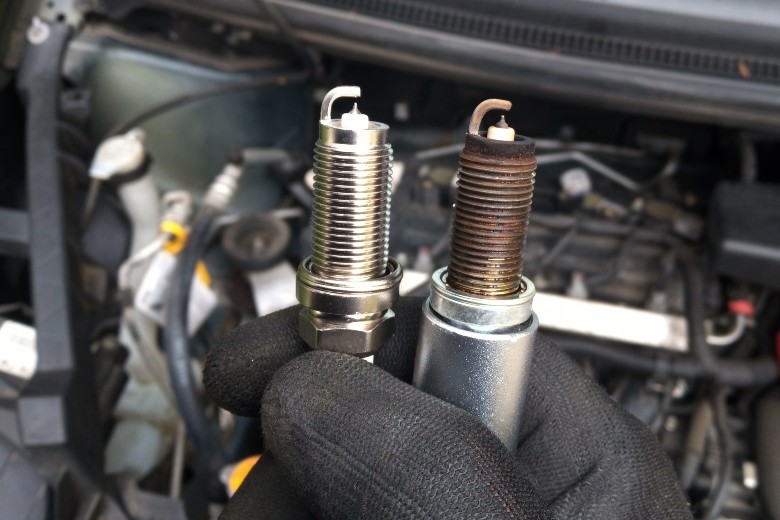
Ignition System Wear
Worn spark plugs, weak ignition coils, or a fading battery can all keep fuel from igniting cleanly. These are small parts, but they carry a lot of responsibility.
Fuel Delivery Problems
Clogged injectors, a dirty fuel filter, or a struggling fuel pump can throw off the fuel pressure your engine depends on for consistent combustion.
Vacuum Leaks and Sensor Issues
A vacuum leak lets unmetered air into the engine, throwing off the air-fuel balance. A faulty oxygen or mass airflow sensor can send bad data to the onboard computer, leading to the same result.
Mechanical and Timing Wear
Slipping timing components, worn piston rings, or valve issues can change how and when combustion happens, and no amount of fuel or spark can fully compensate for that.
Causes at a Glance
Is It Safe to Keep Driving With a Misfire?

Trust the Signs, Protect Your Engine
A misfire is your engine's way of asking for attention, and understanding the signs makes it much easier to respond before a small issue grows into a larger repair. Whether it's a worn spark plug or a sensor sending the wrong signal, getting an accurate diagnosis is the fastest way back to a smooth, confident drive around Phoenix. Our team at Coulter Cadillac Phoenix is here to help you get there.
If you're noticing any of these signs, scheduling a quick diagnostic check at Coulter Cadillac Phoenix is an easy next step. Our technicians know Cadillac vehicles inside and out, and they'll walk you through exactly what your engine needs.
FAQ
Can I still drive my Cadillac if it's misfiring?
You can for a short distance, but it's best to get it checked promptly. Continued driving on a misfire raises the risk of damage to your catalytic converter and other components.
What does it cost to fix an engine misfire?
It depends entirely on the cause. A spark plug replacement is a modest repair, while a failing fuel pump or sensor involves more. A diagnostic visit gives you an accurate picture before any work begins.
Does the check engine light always mean a misfire?
Not always, but a misfire is one of the most common reasons it comes on. A diagnostic scan will confirm whether misfire codes are present and which cylinder is affected.
Can low-quality fuel cause a misfire?
Yes. Fuel that doesn't burn cleanly can contribute to poor combustion, especially when paired with worn ignition components.
How long can a misfire go untreated before it causes damage?
There's no fixed timeline, since it depends on the cause and how often you drive. The safest approach is to schedule service as soon as you notice the symptoms.

